
|
|
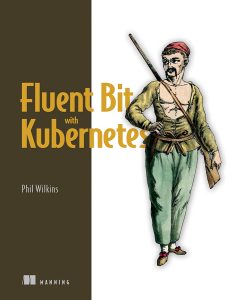
From Fluent Bit with Kubernetes by Phil Wilkins In the world of software architecture, the adoption of Fluent Bit within Kubernetes environments signifies a significant evolution in how we approach monitoring and observability. This combination offers a unique perspective on aligning software architecture with business strategy, transcending the typical application in cloud-native technologies. Fluent Bit’s integration with tools like OpenTelemetry, Prometheus, and Kubernetes illustrates a new era of monitoring that is adaptable not only in cloud-native but also in traditional environments. Enter our guide, Fluent Bit with Kubernetes, by Phil Wilkins, a comprehensive manual for implementing Fluent Bit with Kubernetes. |
Out Now! Only @ Manning.com
Get 45% OFF! With Code: fluentbitfcc
Who is This Book For
This book serves as an enlightening read for professionals involved in software architecture or organizational design, such as architects, CTOs, principal engineers, and tech leads. It is especially beneficial for those seeking to deepen their understanding of modern software monitoring and architecture’s role in achieving organizational objectives.
Key Lessons
Embarking on a journey through Fluent Bit with Kubernetes, we uncover a trove of strategic insights and technical methodologies crucial for today’s software architects and developers.
This section of this article delves into several key lessons extracted from Fluent Bit with Kubernetes on the integration of Fluent Bit with cloud-native technologies and traditional monitoring environments. These lessons, derived from contemporary practices such as Domain-Driven Design (DDD), EventStorming, and Team Topologies, offer a blueprint for enhancing software architecture and monitoring in alignment with organizational objectives. Let’s explore these concepts in detail to understand their impact and applications in modern software development.
Integration of Fluent Bit with Cloud-Native Technologies
Fluent Bit’s seamless integration with cloud-native technologies, including OpenTelemetry and Kubernetes, represents a significant advancement in monitoring capabilities. This integration is critical in modern software environments where robust and versatile monitoring tools are essential.
Adopting a Holistic View of Architecture
The modern approach to software architecture requires viewing it as more than just a collection of technologies and patterns. It’s about understanding architecture’s role in fostering efficient, high-performing organizations, which is increasingly vital in today’s dynamic business landscape.
Utilizing Advanced Techniques for Enhanced Monitoring
Techniques like Domain-Driven Design (DDD), EventStorming, and Team Topologies are instrumental in addressing complex architectural challenges. These methodologies enrich the strategic toolkit for software architects, allowing for more informed and effective decision-making.
Let’s delve into the concepts of Domain-Driven Design (DDD), EventStorming, and Team Topologies, which are significant in the context of modern software architecture and monitoring.
Domain-Driven Design (DDD)
- Domain-Driven Design is a software design approach that focuses on modeling software to match a business domain. It emphasizes collaboration between technical and non-technical team members to create a software model that reflects the complexities and intricacies of the business environment.
- In DDD, the domain is the main focus, and the design is deeply interconnected with the core business concepts. This approach helps in creating software that is more functional and relevant to user needs.
- DDD involves breaking down a complex business domain into smaller, more manageable subdomains and defining a ubiquitous language to ensure clear communication. It often leads to the creation of bounded contexts, which are explicit boundaries within which a particular domain model is defined and applicable.
EventStorming
- EventStorming is a rapid, interactive, and collaborative workshop format that brings together domain experts and team members to explore complex business domains. It’s particularly useful in the initial phases of software development projects.
- The process involves visualizing the business process by identifying key domain events (significant changes in the domain) and then mapping out these events chronologically. This visualization helps in understanding the system’s behavior and identifying potential design and structural issues.
- EventStorming serves as a powerful tool for discovering and discussing the intricacies of business logic, workflows, and system requirements. It’s instrumental in creating a shared understanding and fostering innovation in solution design.
Team Topologies
- Team Topologies is a method for organizing and structuring software development teams to optimize communication and collaboration. It focuses on how teams interact with each other and the software architecture to create a productive and efficient workflow.
- This approach categorizes teams based on their functions and interactions, such as Stream-Aligned Teams, Enabling Teams, Complicated Subsystem Teams, and Platform Teams. Each type of team has specific characteristics and responsibilities that align with the organization’s broader goals and architecture.
- Team Topologies emphasizes the importance of creating clear, streamlined interactions between teams (known as team interaction modes) and advocates for an adaptive organization design. This helps minimize cognitive load, improving team autonomy, and enhancing software delivery performance.
Incorporating these methodologies into software development and architecture can lead to more effective and responsive design, better alignment with business goals, and an improved ability to manage complex systems. They are integral to a modern approach to software development, particularly in environments where agility, efficiency, and alignment with business needs are crucial.
Customizing Monitoring Tools for Specific Needs
The ability to extend and customize Fluent Bit using programming languages such as C, Go, and Lua highlights the importance of adaptable monitoring tools in meeting evolving software demands. This adaptability is crucial in ensuring that monitoring tools remain effective and relevant in various scenarios.
Deep Dive into Features and Applications
Fluent Bit offers an array of features that enhance its usability in different scenarios. Its small footprint and high performance make it ideal for containerized environments. The support for OpenTelemetry within Fluent Bit facilitates streamlined analytics and data collection, enhancing its utility in modern cloud-native ecosystems.
Join Our Newsletter to stay up-to-date on Special Deals and New Releases!
The integration of Fluent Bit within Kubernetes environments marks a new phase in the world of software monitoring and observability. It highlights the importance of adaptable, efficient tools in modern software architecture. This approach to monitoring, which incorporates advanced techniques and customizations, is pivotal for organizations aiming to align their software architecture with strategic business objectives. The lessons from this integration are valuable for professionals seeking to stay at the forefront of software architecture and monitoring trends.