
|
|
100 SQL Server Mistakes and How to Avoid Them by Peter Carter Navigating the intricate landscape of SQL Server can be akin to steering through a labyrinth, where each wrong turn could lead to performance bottlenecks or security vulnerabilities. Our guide, 100 SQL Server Mistakes and How to Avoid Them, emerges as a guiding light in this complex terrain. Authored by Pete Carter, a seasoned veteran with nearly two decades of experience, this book serves as a crucial compendium of insights, tips, and best practices. Whether you’re a novice just getting your feet wet or a seasoned professional seeking to refine your skills, this book is your gateway to mastering SQL Server and ensuring your database systems are robust, secure, and perform at their peak. |
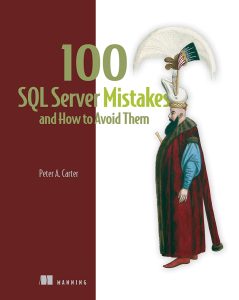
Out Now! Only @ Manning.com
Who is this book for?
100 SQL Server Mistakes and How to Avoid Them is an indispensable resource for anyone who has unexpectedly found themselves at the helm of SQL Server management or development. It’s particularly suited for:
- Individuals who are managing or developing SQL Server instances, often without formal training or preparation in the field.
- Professionals seeking to deepen their understanding of SQL Server’s intricacies, including its development, administration, availability, and security aspects.
To fully harness the wisdom within these pages, readers should have a basic understanding of SQL Server, including the ability to write simple queries, a grasp of fundamental concepts like Instances, Databases, and Tables, and familiarity with encryption and SQL Server installation.
That being said, this guide is intended for all learning levels, and all readers will find knowledge within its pages. Let’s dive into a small sampling of the kinds of lessons found within.
Key Lessons
Understanding Query Processing
Query processing is a critical aspect of SQL Server’s performance. The journey of a query from initiation to execution involves several key components:
- Relational Engine: This component is responsible for parsing the query and converting it into a format that SQL Server can understand and optimize.
- Query Optimizer: This sophisticated component is at the heart of SQL Server’s performance. It takes the parsed query and determines the most efficient way to execute it. Understanding how the Query Optimizer works and how to write queries that it can effectively optimize is crucial for ensuring your database’s performance.
- Query Executor and Storage Engine: After the query is optimized, it’s executed. The Query Executor works in tandem with the Storage Engine to retrieve or modify the data. Understanding how these components interact and how transactions are managed can significantly impact the performance and reliability of your SQL Server instances.
Performance Optimization Techniques
Optimizing SQL Server’s performance involves understanding and avoiding common pitfalls. Key strategies include:
- Avoiding Common T-SQL Pitfalls: Certain practices, like overusing cursors, can lead to performance degradation. Understanding how to write efficient T-SQL code is crucial for avoiding these pitfalls.
- Maintaining Statistics and Indexes**: Regular maintenance of statistics and indexes is vital for query optimization. Outdated or missing statistics can lead to suboptimal query plans, while poorly managed indexes can lead to increased I/O and decreased performance.
- Transaction Management: The choice of transaction isolation level can significantly impact performance. Understanding the implications of each level and choosing the right one based on your needs can prevent performance bottlenecks.
Embracing SQL Server’s Ecosystem
SQL Server operates within a diverse ecosystem, and understanding this ecosystem is key to leveraging SQL Server’s full potential:
- Platform Diversity: SQL Server supports a range of platforms, from various versions of Windows to different flavors of Linux. Choosing the right platform for your SQL Server instances can have significant implications for performance, security, and manageability.
- Containerization and Cloud Support: The rise of containerization and cloud computing has introduced new ways to deploy and manage SQL Server instances. Understanding how SQL Server operates in containerized environments and how to leverage cloud platforms for deploying SQL Server can provide significant flexibility and scalability.
Embarking on a journey through the depths of SQL with 100 SQL Server Mistakes and How to Avoid Them is not merely about learning from mistakes – it’s about transforming those mistakes into stepping stones towards excellence. The book stands as a testament to the intricate dance between complexity and performance in the world of databases, providing a clear path for professionals who aspire to master the art of SQL management and development.
The key lessons delineated in the book transcend the boundaries of mere tips and tricks; they encapsulate a philosophy of proactive learning and continuous improvement. Understanding the nuances of query processing, the art of performance optimization, and the significance of embracing SQL Server’s diverse ecosystem are not just chapters in a book, but chapters in the career of a SQL Server professional.
But this book is more than a collection of lessons. It is a mirror reflecting the common pitfalls that even seasoned professionals may encounter, a compass for navigating the sometimes treacherous waters of database management, and a beacon guiding toward best practices and peak performance. 100 SQL Server Mistakes and How to Avoid Them does not just address the ‘how’ of avoiding errors; it delves into the ‘why,’ fostering a deeper understanding of the Server’s inner workings and cultivating a mindset geared towards precision, efficiency, and foresight.
In an era where data is paramount, and its management is both a skill and an art, this book emerges as an essential ally. Whether you’re an accidental SQL professional or a seasoned expert, the journey through these pages is an investment in knowledge, a commitment to excellence, and a step towards mastering the robust, dynamic, and indispensable world of SQL Server. As you turn the final page, you’re not just concluding a book; you’re commencing a new chapter in your professional journey, armed with insights, strategies, and a profound understanding of how to turn potential mistakes into milestones of success and expertise.