
|
|
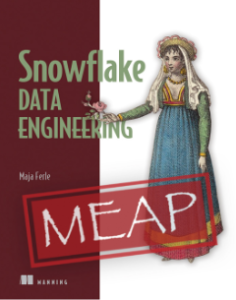
Snowflake Data Engineering by Maja Ferle Dive into the world of Snowflake with Snowflake Data Engineering by Maja Ferle, a comprehensive guide that demystifies data engineering in the Snowflake ecosystem. This book is a treasure trove of knowledge, offering clear, step-by-step examples that evolve from the basics to more complex data pipelines. It’s designed for a wide audience, from newcomers to experienced engineers, looking to leverage Snowflake’s powerful features for optimized data ingestion, transformation, and presentation. With Ferle’s expert insights, you’ll learn to navigate Snowflake’s unique offerings, including Snowpipe, Snowpark, and the Snowflake Marketplace, ensuring your data pipelines are not just efficient but also cost-effective and high-performing. Snowflake Data Engineering is more than just a book; it’s your ticket to mastering one of the most powerful cloud data platforms available today. Ready to transform your data engineering skills? Grab your copy of Snowflake Data Engineering and start building sophisticated, efficient data pipelines in Snowflake. Your journey to becoming a Snowflake expert begins now. |
Out Now! Get your Copy at manning.com
Key Lessons on Data Engineering with Snowflake
Data engineering in the cloud has revolutionized the way organizations store, process, and analyze data. Snowflake, as a leading cloud data platform, offers unique capabilities that data engineers need to master to build efficient, scalable, and cost-effective data solutions.
Here are some key lessons, guided by the knowledge within Snowflake Data Engineering, on leveraging Snowflake for maximum effect.
Embrace the Cloud Data Warehouse Architecture
Understanding Snowflake’s architecture is crucial. Its separation of storage and computing allows for scalable and cost-effective data processing. Familiarize yourself with Snowflake’s unique features such as virtual warehouses for compute resources, databases for storage, and services layer for management tasks.
Efficient Data Staging and Loading
Staging data correctly is foundational for successful data engineering. Use external stages for leveraging existing cloud storage and internal stages for Snowflake-managed storage. Optimize data loading by compressing files, using appropriate file formats, and parallelizing loads whenever possible.
Transform Data with Snowflake’s SQL and Snowpark
Snowflake’s SQL capabilities are powerful for data transformation. Utilize it for tasks from simple data cleaning to complex joins and aggregations. For advanced transformations or incorporating custom Python, Scala, or Java logic, explore Snowpark, which allows executing data frame-based operations within Snowflake.
Continuous Data Loading with Snowpipe
Real-time data processing is increasingly important. Snowpipe automates data ingestion from cloud storage into Snowflake as new data files arrive, enabling near-real-time analytics without manual loading processes. Understanding and implementing Snowpipe is essential for data engineers working on time-sensitive data projects.
Query Optimization Techniques
Optimizing queries in Snowflake can significantly reduce execution times and compute costs. Implement best practices such as selecting only necessary columns, using filters early in queries, and taking advantage of Snowflake’s automatic clustering. Regularly review and optimize query performance based on Snowflake’s query plan and execution statistics.
Leverage Snowflake’s Data Sharing and Cloning Features
Snowflake simplifies data sharing between accounts, enabling seamless collaboration across organizations without data duplication. Utilize Snowflake’s cloning feature to create instant, zero-copy clones of databases, schemas, or tables for development, testing, or analytics without affecting production data or incurring additional storage costs.
Implement Data Governance and Security
Data governance and security are paramount in Snowflake. Utilize Snowflake’s role-based access control to manage user permissions and access to data. Apply data masking and row-level security to protect sensitive information. Audit access and usage patterns to ensure compliance with data governance policies.
Master Data Pipeline Orchestration
Automating and orchestrating data pipelines are vital for efficient data engineering workflows. Snowflake tasks allow scheduling and execution of SQL commands or stored procedures. Combine tasks with streams for event-driven processing or use third-party orchestration tools for complex workflows.
Join our Newsletter! Stay up-to-date on new releases and special deals!
Navigating the complexities of Snowflake data engineering requires more than just a cursory understanding of its features—it demands a deep dive into the practical application of its vast capabilities. The key lessons outlined here serve as your beacon, guiding you through the fundamentals of efficient data engineering practices in Snowflake. But to truly master this powerful cloud data platform, further exploration is essential. Equip yourself with the knowledge to tackle real-world challenges by exploring our detailed guide that covers these lessons in depth and more.
Transform your data engineering journey with Snowflake today and unlock the full potential of your data.
FAQs

1. What is Snowflake, and how does it revolutionize data engineering?
Snowflake is a cloud-based data platform that separates compute from storage, enabling scalable and cost-effective data processing. It supports various data engineering tasks, from data warehousing and big data analytics to real-time analytics, without the need for physical hardware or complex setup. Its architecture allows for easy data sharing, elastic scalability, and concurrency without performance degradation, revolutionizing how developers work with data.

2. How do I start with data engineering in Snowflake?
Begin by setting up a Snowflake account and familiarizing yourself with the web interface. Next, create a database, schema, and your first data pipeline by staging data files, loading them into Snowflake tables, and performing basic transformations. Our book guides you through these steps with practical examples, from account creation to executing your first queries.

3. What are the best practices for staging data in Snowflake?
Best practices include using external stages for large datasets stored in cloud storage services and internal stages for smaller datasets or temporary storage. Optimize file formats and sizes for efficient ingestion and use Snowflake’s COPY command for loading. Structure your staging environment to support incremental loads, ensuring data freshness and minimizing load times.

4. How can I transform data effectively in Snowflake?
Leverage Snowflake’s SQL capabilities for data transformation tasks. Utilize Snowflake’s support for semi-structured data formats like JSON and Avro by using functions such as FLATTEN to convert semi-structured into structured data. For complex transformations, consider using Snowflake's Snowpark to write data pipelines in languages like Python, Scala, or Java. Always test transformations on a subset of data before applying them to the entire dataset.

5. How does continuous data loading work in Snowflake, and why is it important?
Continuous data loading in Snowflake can be achieved using Snowpipe, which automates the ingestion of data as soon as it arrives in a cloud storage stage. This is crucial for real-time analytics and ensuring that your data warehouse contains the most current data without manual intervention. It enables timely insights and decision-making based on the latest data.

6. What strategies should I follow for optimizing query performance in Snowflake?
Optimize query performance by designing efficient data schemas, utilizing clustering keys to organize data within tables, and employing Snowflake’s caching mechanisms. Use materialized views for frequently queried data and consider search optimization for faster search performance on large datasets. Regularly monitor and analyze query performance through Snowflake’s query profiler to identify and address bottlenecks.