
|
|
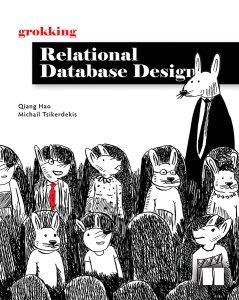
Grokking Relational Database Design by Qiang Hao and Michail Tsikerdekis Dive into the essentials of relational database design with Grokking Relational Database Design by Dr. Qiang Hao and Dr. Michael Tsikerdekis. This book is a treasure trove for anyone eager to grasp the fundamentals and advanced concepts of database design, from SQL basics to sophisticated database normalization and beyond. Whether you’re in IT, data science, or business intelligence, this guide ensures you’re well-equipped to tackle the challenges of modern data management. With their vast teaching experience, the authors break down complex topics into understandable segments, ensuring a seamless learning journey for readers of all backgrounds. The book’s structure, from starting with SQL to integrating generative AI tools like ChatGPT in database design, illustrates a practical approach to mastering database design. It’s not just a manual; it’s a pathway to innovation and expertise in the ever-evolving realm of data management. |
Unleash Your Data Superpowers: Dive into the Heart of Relational Database Design
Embarking on the journey of relational database design unlocks the door to mastering data management in an era where information is king. The key lessons shared below are just the tip of the iceberg, offering a glimpse into the world of efficient and effective database design.
For those eager to dive deeper and transform these foundational insights into expertise, exploring the full contents of Grokking Relational Database Design will equip you with the tools, strategies, and knowledge to excel in this critical field. Embrace the opportunity to elevate your skills and make a lasting impact in the world of data management.
Why wait? Get started on your learning journey now!
Grokking Relational Database Design, at Manning.com
Key Lessons in Relational Database Design
Understanding the fundamentals of relational database design is crucial for anyone looking to efficiently manage and utilize data in today’s data-driven world. Here are some key lessons that can help you build a solid foundation in designing and optimizing relational databases.
Start with a Strong Entity-Relationship Model
The entity-relationship (ER) model is the backbone of database design. It allows you to visually outline the database’s structure by defining entities (tables) and relationships (connections) between them. Start by identifying all entities and their attributes, then define the relationships (one-to-one, one-to-many, many-to-many) between these entities. This model serves as a blueprint for your database, ensuring a logical structure that supports efficient data retrieval and integrity.
Embrace Database Normalization
Normalization is the process of organizing the attributes and tables of a database to minimize redundancy and dependency. It helps in eliminating duplicate data and ensures consistency within the database. The normalization process is typically executed through a series of normal forms, each with specific criteria to meet. By normalizing your database, you improve data integrity and make the database easier to maintain over time.
Understand and Implement SQL Fundamentals
SQL (Structured Query Language) is essential for creating, managing, and querying relational databases. Understanding key SQL operations such as `SELECT`, `INSERT`, `UPDATE`, `DELETE`, and the use of conditional clauses (`WHERE`, `AND`, `OR`) is crucial. Mastering SQL allows you to interact with your database effectively, from data insertion and modification to complex querying and data analysis.
Optimize Performance with Indexing
Indexes are special lookup tables that the database search engine can use to speed up data retrieval. By creating indexes on columns that are frequently searched or queried, you can significantly reduce response times and enhance your database’s performance. However, be mindful that while indexes speed up data retrieval, they can slow down data insertion, deletion, and update operations due to the need to maintain the index structures.
Plan for Scalability and Flexibility
A well-designed database not only meets current requirements but also accommodates future growth. Consider scalability in terms of data volume, user load, and transaction rate. Implementing features such as partitioning and replication can help manage large datasets and ensure high availability. Additionally, maintain flexibility in your design to allow for adjustments as business needs evolve.
Prioritize Data Security
Data security is paramount in database design. Implement robust access controls to ensure that only authorized users can access or modify data. Use encryption for sensitive data, both at rest and in transit, to protect against unauthorized access and potential data breaches. Regularly review and update security measures in response to emerging threats.
Utilize Generative AI for Enhanced Design
Generative AI tools, like ChatGPT, can offer support in various stages of database design. From generating SQL queries to suggesting design optimizations and schema modifications, these tools can provide valuable insights and automate routine tasks. This allows database designers to focus on more strategic aspects of the design process.
By incorporating these key lessons into your relational database design efforts, you can create efficient, scalable, and secure databases that effectively support your data management needs.
Join our Newsletter to stay Up-to-Date on special deals and new Releases!
The realm of relational database design is vast and rich with potential for innovation and optimization. The key lessons we’ve explored provide a foundational understanding necessary for anyone looking to navigate this space effectively. However, true mastery comes with a deeper exploration and application of these principles. By delving into “Grokking Relational Database Design,” you’re not just learning; you’re preparing to lead in the evolution of data management. Let this be your first step toward becoming a guardian of data integrity, efficiency, and security in an increasingly data-driven world.
FAQ: Relational Database Design Topics

1. What is a relational database, and how does it differ from other database types?
A relational database is a type of database that organizes data into tables that can be linked—or related—based on data common to each. This contrasts with non-relational databases, such as NoSQL databases, which can store data in a variety of formats without fixed table schemas.

2. Can you design a relational database without prior programming knowledge?
Yes, the basics of relational database design can be understood without extensive programming experience. Understanding the principles behind table creation, data relationships, and SQL for data manipulation is more critical than programming skills.

3. What are entities and attributes in database design?
In database design, an entity refers to a real-world object or concept that can be distinctly identified, such as a person, place, item, or event. Attributes are the properties or characteristics of an entity, like a person's name, address, or age.

4. Why is database normalization important, and how do you achieve it?
Database normalization is a process used to organize a database into tables and columns to reduce data redundancy and improve data integrity. It involves dividing a database into multiple related tables and defining relationships between them. Normalization is achieved through a series of rules or "normal forms."

5. How does SQL play a role in relational database design?
SQL (Structured Query Language) is the standard language for interacting with relational databases. It plays a crucial role in defining, manipulating, and querying data. SQL is used to create and modify tables, insert, update, and delete data, and retrieve data from a database according to various conditions.

6. What are the challenges of relational database design, and how can they be addressed?
Challenges include ensuring data integrity and consistency, optimizing database performance, and maintaining scalability and flexibility. These can be addressed by careful planning, applying normalization principles, implementing proper indexing strategies, and considering future needs during the design phase.

7. How does generative AI, like ChatGPT, facilitate database design?
Generative AI can assist in database design by automating the generation of SQL queries, suggesting design optimizations based on best practices, and even creating initial database schema proposals. These tools can help designers focus on higher-level design considerations by handling routine tasks.

What are some questions you want answered about Relational Databases? Drop us a comment or tag us in a post on Twitter or LinkedIn to let us know!